
DrugOptimal: a future-proof solution for drug incompatibility
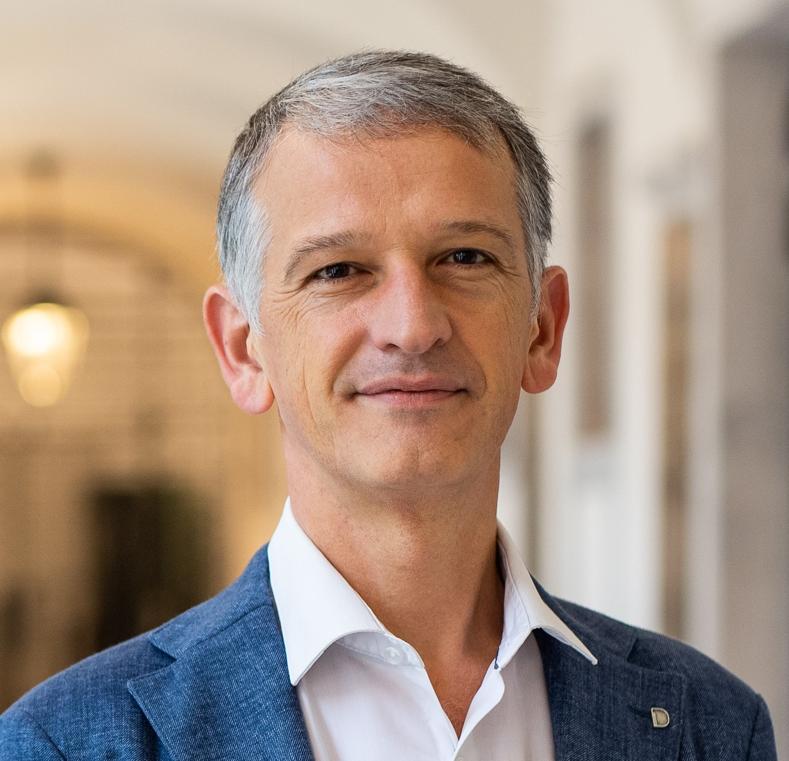
Up to one in five medications is incompatible when it comes into contact with another drug in an IV tube. To address this issue, Lugan Flacher and Matthieu Gasc co-founded DrugOptimal on April 14, 2022. The startup now supports more than 40 healthcare facilities by leveraging artificial intelligence and its analytical laboratory to combat drug incompatibility.
Medicines: a complex issue
The French Society of Clinical Pharmacy (SFPC) describes drug incompatibility as an uncontrolled problem. The issue is indeed difficult to address for two reasons. The first is the very nature of medication, which suffers from a lack of data. To avoid incompatibilities, it is necessary to identify and detect them, but how can they be detected without sufficient knowledge?
The difficulty persists. The second issue concerns the fact that this is a problem that can largely be addressed during administration. In other words, if nurses properly schedule infusions to prevent incompatible medications from coming into contact, the problem can be avoided. However, there are currently no practical solutions in healthcare settings that allow for real-time management of the issue.
However, drug incompatibility has always been of interest to both pharmacists and learned societies, but without real solutions, it remained a blind spot. Claire Chapuis, a pharmacist in the clinical pharmacy department of the Grenoble Alpes University Hospital, created an in-house application, based on a list of medications used in intensive care, with a colleague who was an anesthesiologist-intensivist, fully realizing the need for this type of tool.
“After working for a while, the tool eventually broke down,” the pharmacist told us. It was at this point that Lugan Flacher, who had already completed his externship and thesis at the Grenoble University Hospital on intravenous practices and incompatibility, arrived with DrugOptimal.
DrugOptimal: Artificial intelligence at the service of incompatibility
“In intensive care, we need these kinds of tools. So when Lugan came along with their solution, it naturally piqued our interest. It was a much more comprehensive continuation of what we had created, since it’s based on artificial intelligence, which is already innovative, and on laboratory chemistry analyses,” explains Claire Chapuis. The solution, co-founded by Lugan, has indeed used AI to analyze nearly 22,000 scientific articles and is linked to a laboratory that will perform additional analyses if healthcare professionals wish to test prescriptions.
Since the start of its activity, Drugoptimal intercepts between 100 and 400 incompatibilities per service per month, which, according to studies, can lead to a reduction in complications, sometimes fatal, of 26%.
Claire admits: “Thanks to DrugOptimal and their laboratory, we got results on mixtures and were reassured.”
Pierrick Bedouch, coordinator of the Pharmacy Department at the Grenoble Alpes University Hospital, adds that “this tool strengthens the safety of both patients and healthcare professionals. It secures the work of nurses.”
Having proven its effectiveness, the solution is also being closely monitored by the Ministry of Health. Catherine Vautrin, Minister of Labour, Health, Solidarity and Families of France, declares: “The Ministry of Health is attentive to the issue of drug incompatibilities, which represents a public health challenge in terms of the quality and safety of care.
The ability of healthcare professionals to equip themselves to identify these risks and adapt administration methods accordingly reflects our healthcare system’s capacity for continuous improvement, innovation, and digital integration to address the challenges expressed by healthcare professionals. We encourage hospital-based initiatives and innovative projects that contribute to providing practical solutions to these challenges.
Lugan Flacher now wants to take DrugOptimal further by continuing to rely on artificial intelligence.
He acknowledges that his startup isn’t a pioneer in drug incompatibility, but that AI and research conducted within their own laboratory provide them with an extensive knowledge base: “We’re starting to make predictions about mixtures of more than two drugs, which is extremely new and closer to clinical reality.” This further reduces the risk of incompatibility.
Read the article here: https://www.sih-solutions.fr/magazine
