
At the heart of Montpellier University Hospital: innovation to combat antibiotic resistance
Published on 08/02/2026
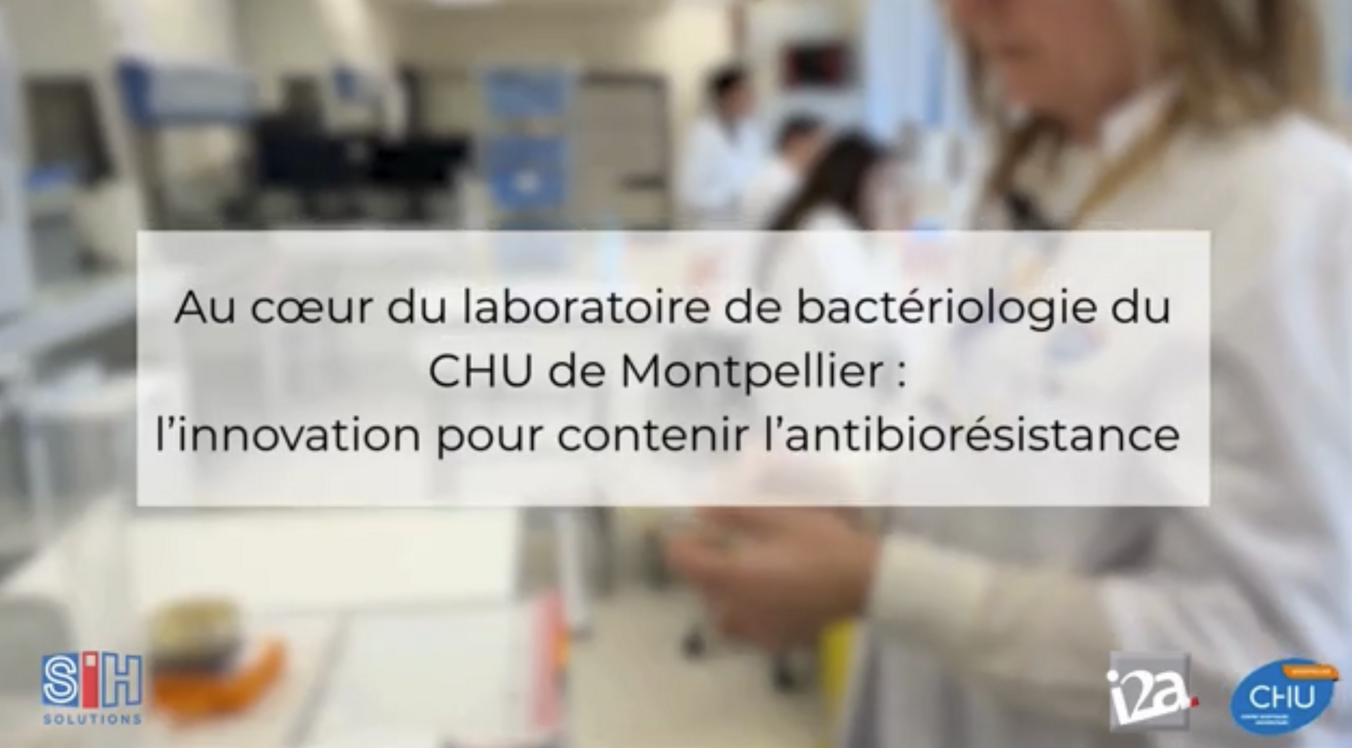
[custom-html]
[custom-html] ### At the heart of Montpellier University Hospital: Innovation to contain antibiotic resistance. Antibiotic resistance is now one of the major global public health challenges. According to a recent report by the World Health Organization, more than 15% of laboratory-confirmed bacterial infections were resistant to commonly used antibiotics in 2023. Faced with this growing threat, rapid diagnosis is crucial: detect quickly, treat appropriately, and limit the use of broad-spectrum antibiotics as much as possible, in order to preserve the microbiota and prevent the emergence of new resistances. ### Montpellier on the front line: a committed and innovative laboratory. A pioneer in this fight, Montpellier University Hospital relies on dedicated healthcare professionals and technicians and cutting-edge technologies to improve the detection and monitoring of multidrug-resistant bacteria (MDR). “The problem is intensifying, and even more so in developing countries,” notes Professor Sylvain Godreuil, head of the bacteriology department. According to the WHO, antibiotic resistance could become the leading cause of death worldwide by 2050. Every day, hundreds of samples are processed here. The slightest suspicion of infection requires a rapid and reliable response. To this end, the University Hospital relies in particular on tools developed by i2a, a French company specializing in the automation of microbiological diagnostics. ### i2a: 38 years of expertise in diagnostics. Thirty-eight years ago, three computer scientists, in partnership with Professor De Micco, laid the foundations for a groundbreaking approach: improving the application of scientific recommendations using diagnostic software, at a time when everything was still done manually. This vision gave birth to i2a, now a recognized leader in the fight against antibiotic resistance. Since then, the company has developed a range of automated analyzers and reagents, and expanded internationally, while maintaining its core mission. Mr. Emelianoff, CEO of i2a, explains: “Our mission remains the same: to combat antibiotic resistance, while developing high-performance and robust solutions for healthcare professionals and cost-effective solutions for institutions.” ### Automated analyzers that accelerate and secure diagnosis At Montpellier University Hospital, the SIRscan Orion automated analyzers analyze antibiograms using the agar diffusion method. The combination of high-definition reading and an expert system incorporating deep learning enables a precise, standardized, and rapid interpretation of susceptibility profiles. This precision medicine is essential for effectively adapting treatments to multidrug-resistant bacteria, avoiding broad-spectrum therapies, and limiting the consequences for public health and patient health. ### Automation and Human Expertise: A Deliberate Complementarity For the laboratory teams, i2a’s innovations don’t replace healthcare professionals; they amplify their work. Devices like Inoclics and ready-to-use water tubes reduce repetitive handling and ensure the safety of inoculum preparations. Automated systems then handle incubation, reading, and interpretation, which biologists validate each morning. “The patient is central. Our goal is for every patient to receive the right treatment as quickly as possible. Then, we ensure that the tools are efficient and traceable for healthcare professionals,” says Mr. Emelianoff, CEO of i2a. With this approach focused on the real needs of the field, i2a is fully committed to the development of precision medicine. ### Innovating “by evolving,” not by disrupting. The relationship of trust between i2a and healthcare teams has shaped a unique innovation strategy: moving forward without disrupting established practices. “We don’t want revolutionary innovations that could disrupt current practices. We prefer to develop our innovations “by evolving,” based on solid reference techniques into which we inject innovation,” says Mr. Emelianof. “The SIRscan Orion automated systems, based on the Kirby-Bauer method used for over 70 years, perfectly illustrate this philosophy.” ### Towards a new era: AI, automation, and intelligent validation. The university hospital laboratory is beginning to deploy the STAR module, an intelligent module from i2a. Thanks to image analysis and a confidence score*, it automates the reading of inhibition zones and offers assisted validation. “The biologist remains the decision-maker, but saves valuable time while increasing the reliability of the results,” emphasizes Professor Godreuil. Other software and robotic innovations are under development to monitor the evolution of resistance and further automate certain key steps in the antibiogram protocol. “We are developing products whose combined effectiveness multiplies their initial added value, benefiting patients, healthcare professionals, and technicians,” states Mr. Emelianoff. Direct Benefits for Healthcare Facilities and Public Health By taking into account the constraints of the hospital environment from the design stage (scarce resources, budgetary constraints, need for speed), i2a offers solutions adapted to real-world conditions. Some innovations also play a crucial role in epidemiological surveillance. The Nosocomial Infection module, for example, centralizes data, identifies at-risk situations, and triggers alerts in case of suspected nosocomial infections. Another example is the Epidemiology module, which enables highly detailed statistical analysis of the ecology of the analyzed data. ### An exemplary partnership serving the patient By combining scientific rigor, controlled innovations, and collective commitment, i2a and Montpellier University Hospital have formed an effective collaborative model against antibiotic resistance. “We have successfully navigated a difficult marriage: expanding internationally, fundamentally transforming operational models to foster this growth, while continuing to innovate in close collaboration with our clients,” says Mr. Emelianoff. “This is thanks to our teams. I am proud of them.” “The key for us is to seek to improve well-known and established reference methods, without rushing,” he concludes. *This feature is not yet deployed and final validation by the biologist will still be required.