
A new decree and cutting-edge technologies to strengthen telemedicine
As pressure mounts on hospital beds, a decree has just approved coverage for remote patient monitoring. This is a way to relieve pressure on services and formalize an already well-established trend.
A “virtual hospital” at home
France is now the first European country to reimburse remote patient monitoring services. On December 30th, Decree 2002-1767 expanded the range of covered conditions. Previously limited to five conditions, reimbursement will now be available for all illnesses monitored remotely. The only requirement is that this remote activity be more beneficial than conventional medical care. This expansion addresses a current need. A shortage of healthcare professionals, limited capacity, budget cuts… Solutions had to be found to address this situation, and “hospital technology had to be brought home,” explains Frédéric Valentin, Managing Director for France, Italy, and Spain at Masimo, a company specializing in non-invasive medical monitoring devices and remote monitoring. “This contributes to lower costs and staffing levels while improving patient comfort.” According to the Managing Director, in a hospital ward offering light monitoring, the patient is seen once every four hours. At home, they will have “continuous clinical-quality monitoring equivalent to that used in the hospital.” According to Yann-Maël Le Douarin, Deputy Head of the “Cooperation and Contracting” Office at the DGOS (Directorate General for Healthcare Provision), “it was too late to wait. The benefits of such practices are considerable.” “First, from an organizational standpoint, remote monitoring optimizes the patient’s care pathway while allowing healthcare professionals to better coordinate their efforts. It is thanks to these kinds of practices that we will be able to increase the number of patients being treated at the hospital.” Furthermore, in terms of the patient’s quality of life, clinical care is improved. Patients become more autonomous and therefore more involved in their own care, and “early detection of signs of decompensation often prevents hospitalization and serious complications.”
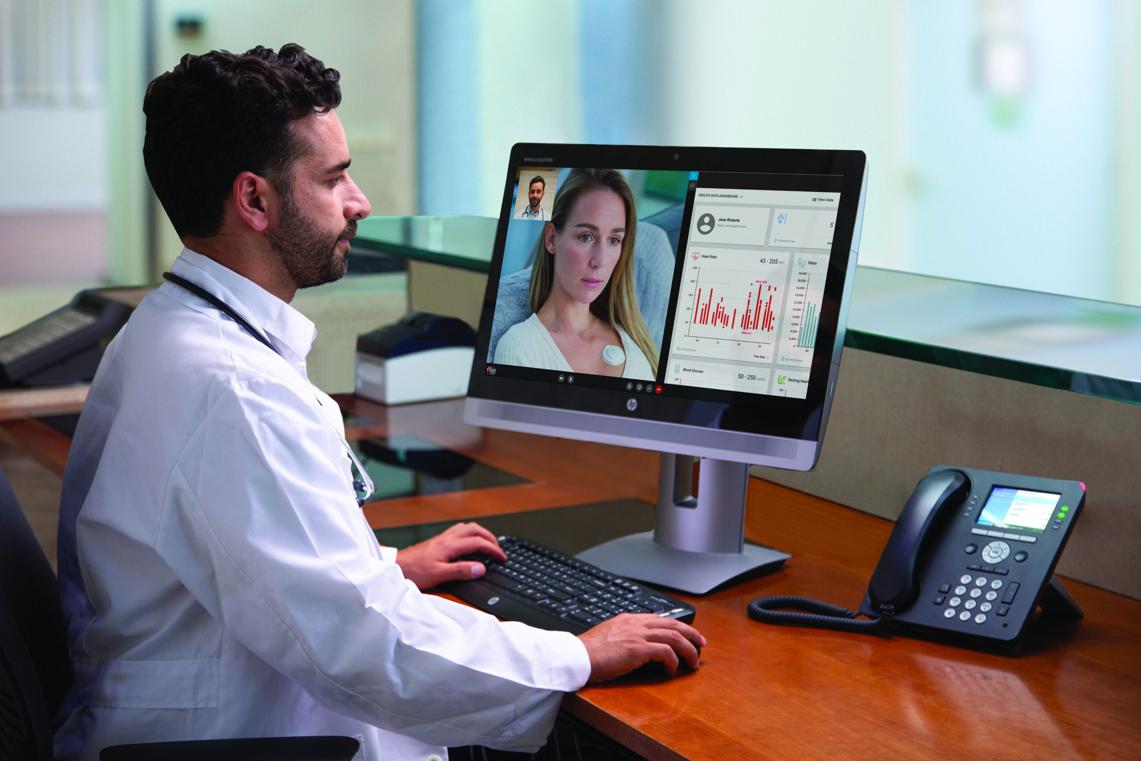
“For several years now, we have been witnessing a transition from inpatient hospitalization, as we have known it until now, to outpatient hospitalization,” explains Professor Antoine Tesnière, Director of PariSanté Campus. Outpatient hospitalization is based on technical and interventional platforms. The patient goes there for a procedure or treatment, and many things are managed both before and after their arrival. This allows patients to optimize their hospital stay and continue their care outside the hospital. This transition is facilitated by digital platforms and tools, and requires supporting healthcare professionals and organizations through these changes. For this, tools are essential. The development of the IoT has significantly transformed practices. So much so that, according to Stéphane Bertolino, a telemedicine specialist at Masimo, it’s possible to help establish “a virtual hospital at the patient’s home.” The Masimo SafetyNet® remote monitoring solution provides access to various uses. “First, a clinical portal that collects and displays data and triggers alerts via email or SMS when necessary. And also care programs dedicated to each care pathway. Every day, a message is sent to the patient to assess their condition, their pain level, show them a video, or offer advice.” “And in terms of monitoring, Masimo offers a wide range of services, including clinical-grade SpO2 equivalent to hospital technology, heart rate, respiratory rate, temperature, arterial flow perfusion index… Numerous parameters are monitored. Since 1989, the American company has been developing measurement tools. A global leader in pulse oximetry for neonatology and pediatrics, it has specialized in non-invasive methods. Painless, risk-free, without side effects, and easy to use, this method is perfectly suited to telemedicine. “And the potential applications are numerous,” emphasizes Frédéric Valentin. “All the data is accessible on a single dashboard, which can be customized to suit the patient’s needs and profile.” All the data is then sent to the patient’s electronic health record (EHR) for monitoring and follow-up.” This is, in fact, one of the recommendations of the HAS (French National Authority for Health), as Pierre Simon, a hospital practitioner specializing in telemedicine, points out: “The doctor conducting a teleconsultation must, on the one hand, have access to the patient’s health data necessary to perform a quality service, and on the other hand, at the end of the consultation, prepare a report which they file in the patient’s medical record.”
A hospital-wide medical project
At the St-Brieuc Hospital Center, discussions on telemedicine have been underway for some time. “Nationally, in general, we lack neonatal beds,” explains Jérôme Aboab, a doctor at the Armor Hospital Group. He is considering launching a pilot project for home monitoring of “stabilized infants whose weight gain is a key concern.” In this process, “Masimo is helping us, particularly in defining our needs.” With their extensive experience, they have examples of patient journeys to share with us, which is crucial, as the organizational aspect is invaluable in this type of project. Indeed, the questions raised are significant: selection of eligible patients, monitoring of alerts, staff rotations, the role assigned to home hospitalization (HAD)… A strategy must be developed collaboratively by all stakeholders, from management to home healthcare providers (PSADs), including hospital services. “It’s a true institutional project,” emphasizes Stéphane Bertolino. “A health economics approach is necessary to map the institution’s activity upstream. Average length of stay (ALOS), costs, and patient demographics are all thoroughly examined. The goal? To reduce ALOS and optimize resources.” A promising prospect for healthcare facilities, which should not remain indifferent to these arguments.
Marion BOIS
