
SESAME: software that is revolutionizing hospital bed management in Maine-et-Loire
Published on 27/11/2025
[custom-html]
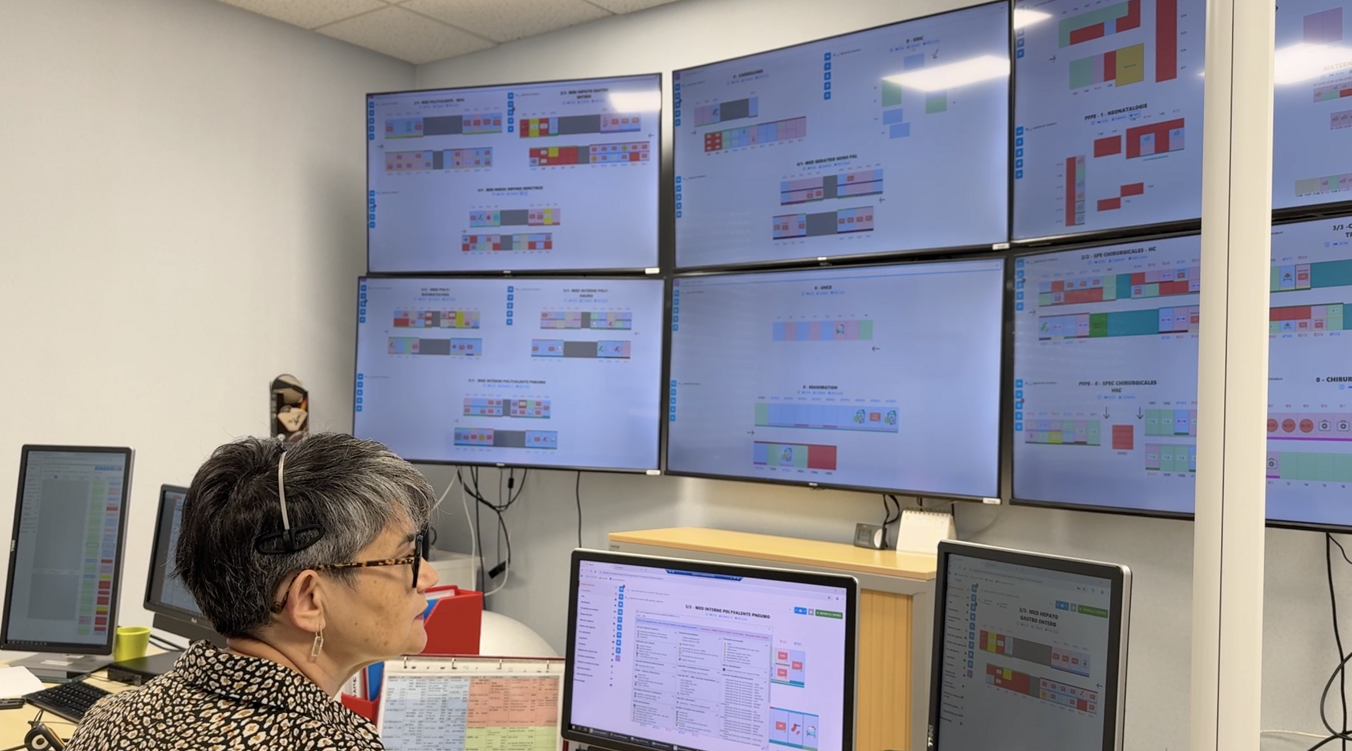
SESAME: Software Revolutionizing Hospital Bed Management in Maine-et-Loire. The Covid-19 crisis has profoundly transformed hospital organization in France. Among the challenges highlighted, one of the most critical remains the need for a clear and instant view of bed availability at all times. This is a crucial issue as emergency services remain under pressure and the smooth flow of the patient pathway has become a national imperative. In Maine-et-Loire, the Territorial Hospital Group (GHT) has chosen to meet this challenge by deploying SESAME, a coordinated bed management software developed by Atout Majeur Concept. The Cholet hospital served as a pilot site before a gradual rollout to other facilities in the region. * * * ## A dedicated room for real-time bed occupancy management At Cholet Hospital, the impact of the system is tangible as soon as you enter the scheduling room: a room equipped with screens that continuously display the bed occupancy status in all departments—emergency, medicine, surgery, maternity, and pediatrics. This unified, real-time view allows: * immediate identification of available beds or beds about to become available; * directing new arrivals to the most appropriate unit; * facilitating direct admissions without going through the emergency room; * streamlining coordination with the emergency department, which can proactively report patients waiting for a bed. This organization prevents overcrowding and optimizes patient flow between departments. * * * ## A tool designed for healthcare professionals and for the field. For Benoît Baty, Director of Care, Quality, and Patient Pathway, the benefits are immediate: > “Today, I have perfect visibility of all the beds, including what is happening in the emergency department. I know in real time what the movements are in the hospital, both admissions and discharges.” SESAME stands out in particular for its graphic representation, faithful to the actual floor plan of the building. Healthcare professionals can instantly see: * the location of each patient, * whether they are in their room, in the operating room, or have left the ward, * the information updated by the teams at each stage. This user-friendly design promotes rapid adoption of the tool, strengthens communication between departments, and reduces information loss. * * * ## A direct impact on the quality of the patient pathway. Beyond organizational improvement, the primary objective remains the quality of care. The tool ensures that each patient has access to the right bed, at the right time, in the right specialty, which helps to: * reduce the time spent on a stretcher in the emergency room, * speed up transfer to the appropriate unit, * improve comfort, safety, and continuity of care. As Benoît Baty points out: > “In a context where emergency rooms are under considerable strain, the idea is to prevent patients from spending too much time on a stretcher and to be able to quickly transfer them to an appropriate unit.” Thus, a patient with a digestive disorder can be sent directly to gastroenterology as soon as a bed becomes available, guaranteeing optimal care. * * * ## A project born from the health crisis and designed for the region. For Stéphanie Rousselin, Deputy Director in charge of the GHT (Groupement Hospitalier de Territoire - Territorial Hospital Group) at the Angers University Hospital, the pandemic brought to light a previously unmet need: having a dynamic and regional view of bed availability. SESAME addresses this need by: * providing a high-performance internal management tool for each establishment, * offering a shared vision among all the actors of the GHT: local hospitals, psychiatric establishments, clinics, SSR, HAD… This pooling makes it possible to anticipate needs, identify available beds across the territory and organize smooth transfers, both in times of crisis and in the daily management of hospitalizations.